
 Image 1 of 4
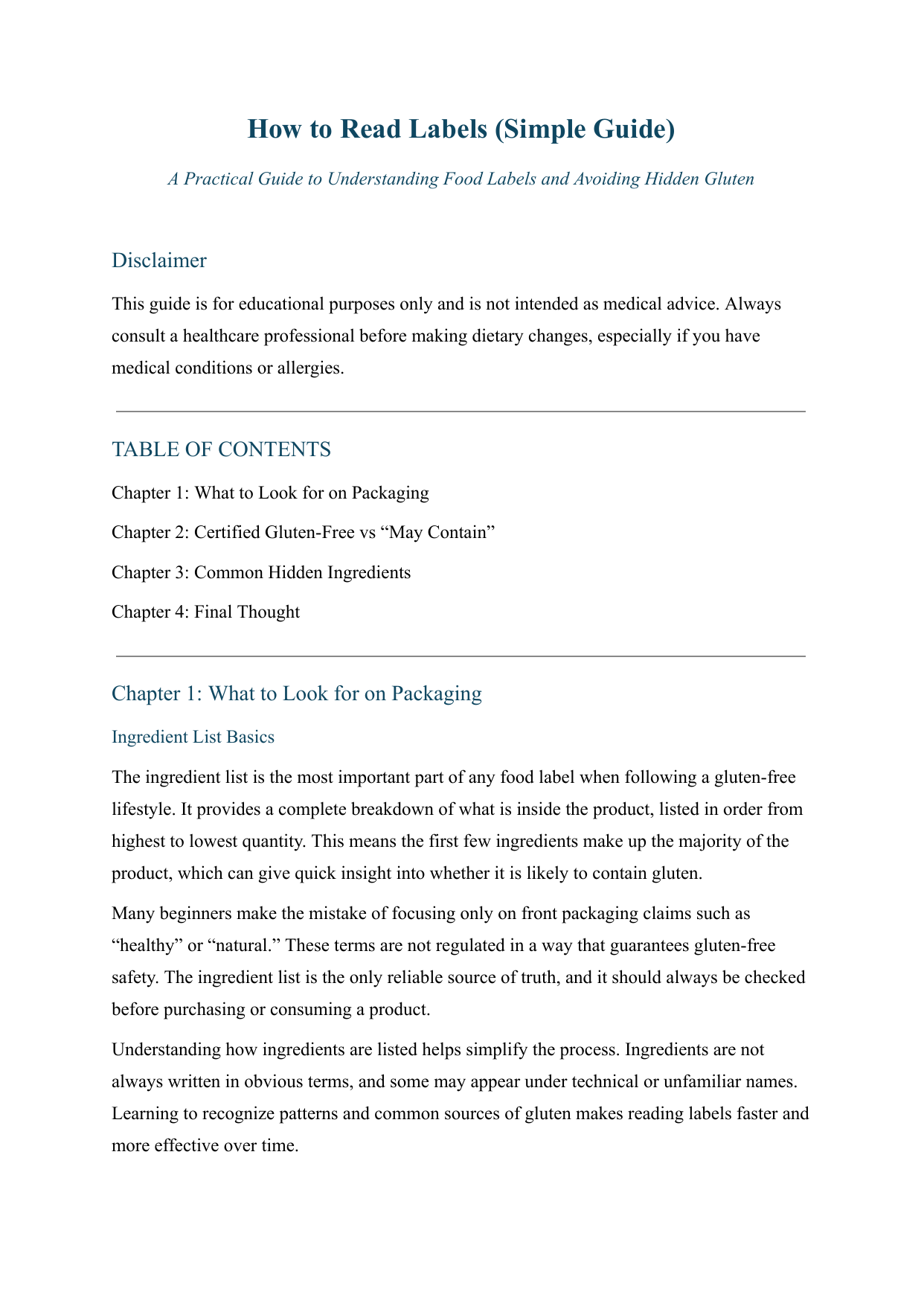 Image 2 of 4
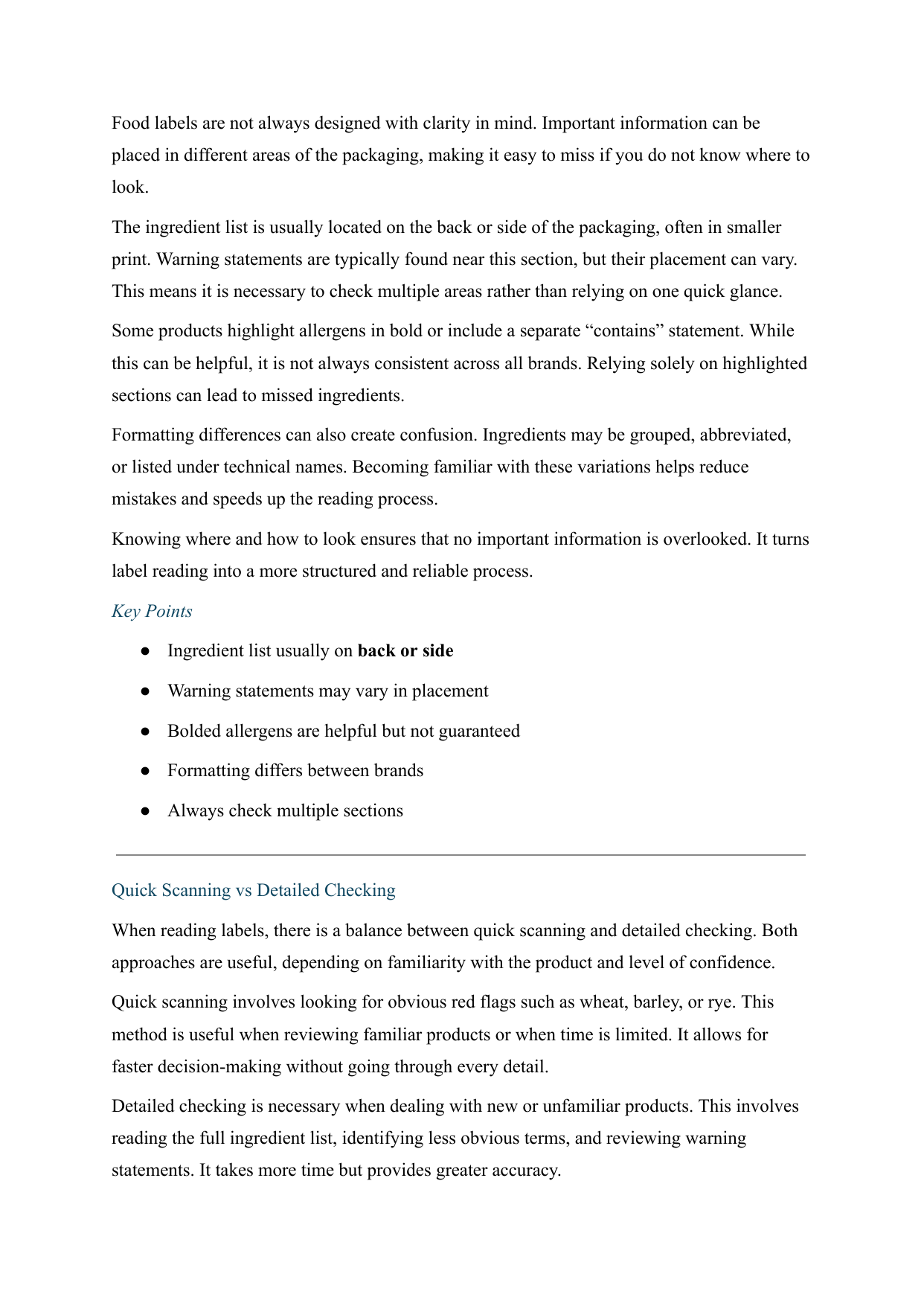 Image 3 of 4
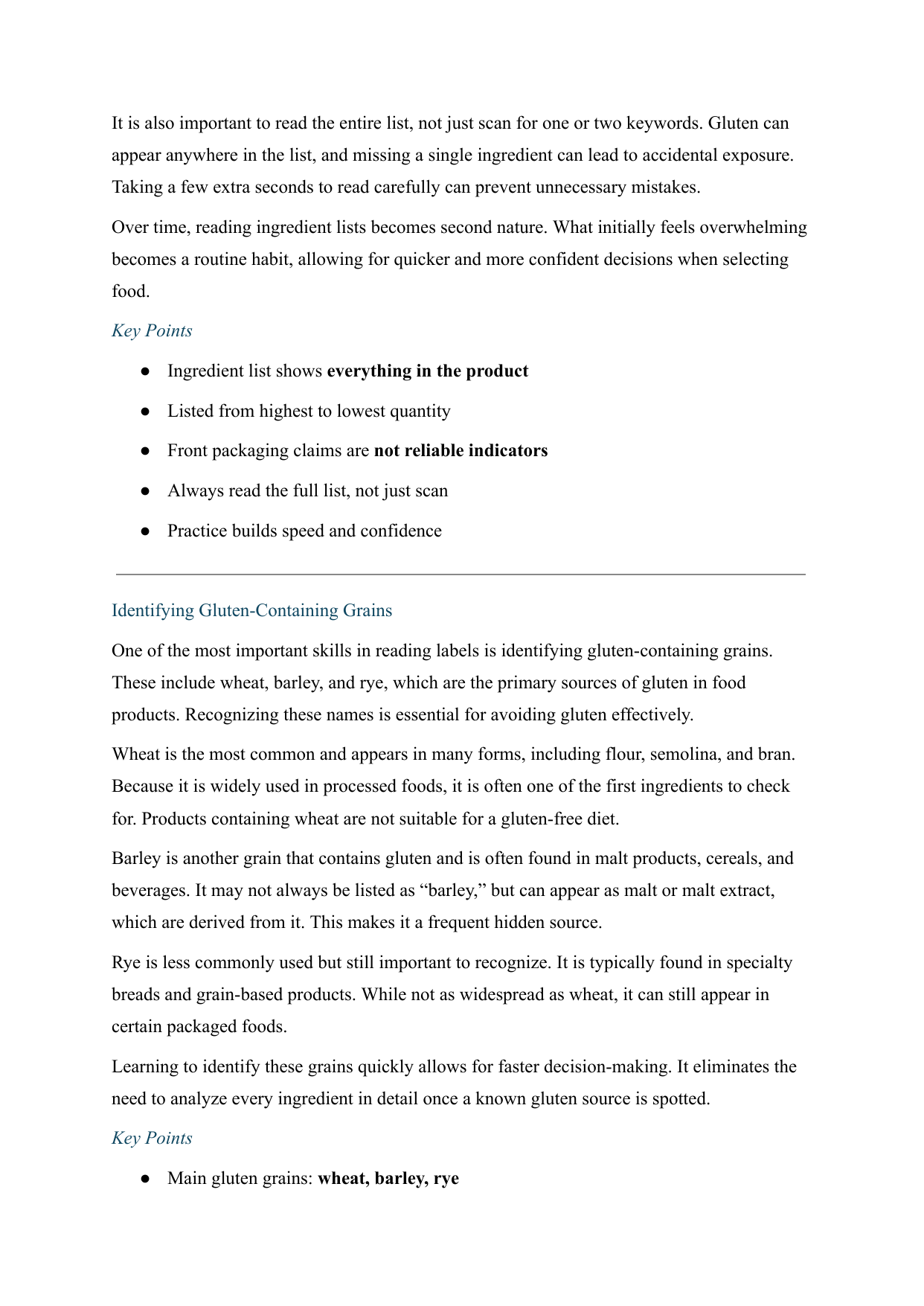 Image 4 of 4
We ask for your name and email at checkout so we can send the file and tell you when it's updated. No card, no charge.
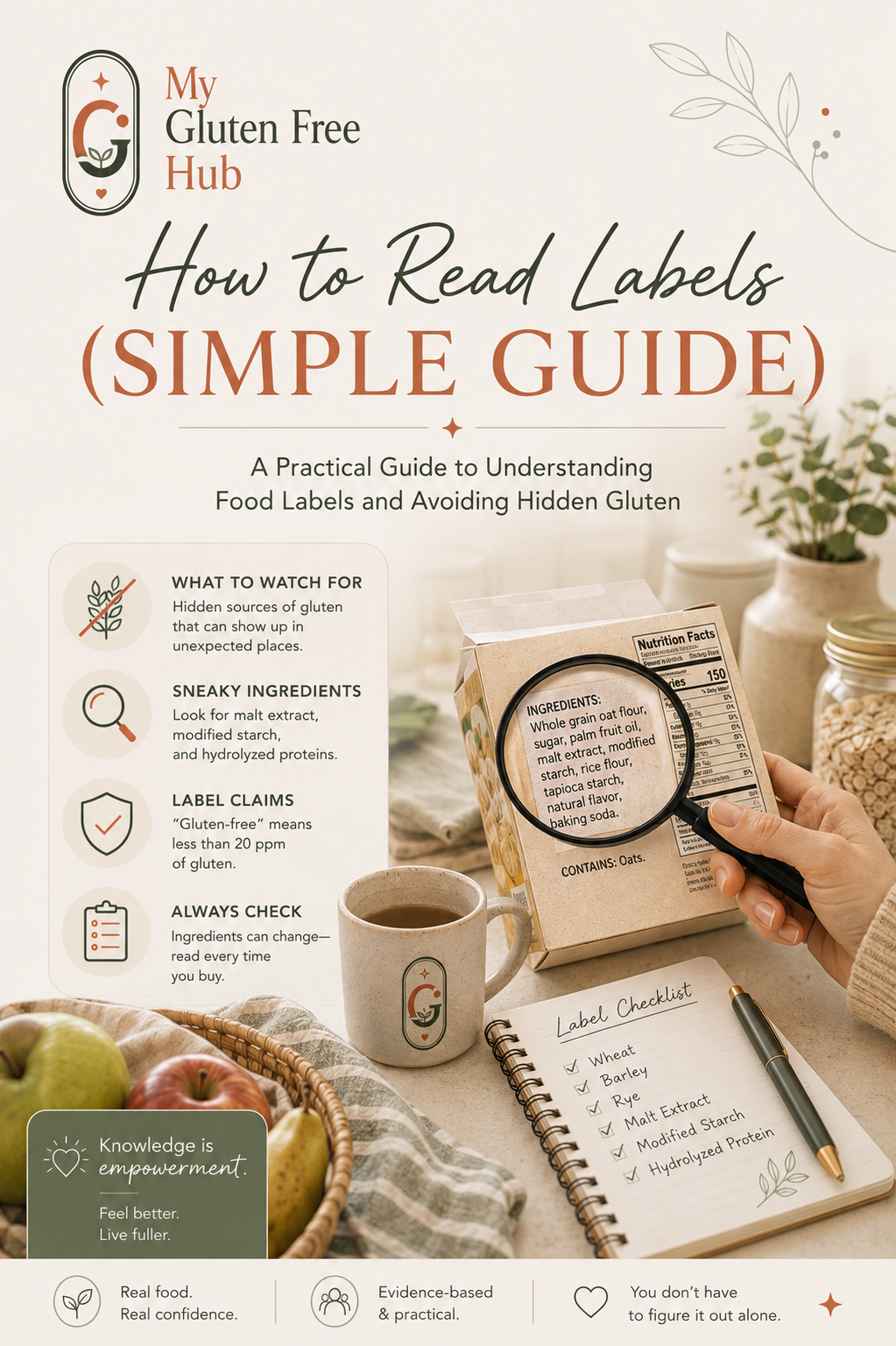
Reading food labels shouldn’t feel confusing, but when you’re gluten-free, it often does.
Ingredients can be misleading, terms aren’t always clear, and labels like “may contain” or “gluten-free” don’t always mean what people think they do.
This guide breaks everything down in a simple, practical way so you can quickly understand what you’re looking at and make safer choices with confidence.
Inside, you’ll learn:
• What to look for on packaging and ingredient lists
• The difference between certified gluten-free and “may contain” labels
• Common hidden ingredients that can contain gluten
• How to read labels faster without overthinking every product
No complicated explanations, no guesswork. Just clear guidance you can actually use while grocery shopping.
If you’ve ever stood in the aisle double-checking the same label five times, this guide will make things a lot easier.
Written by Ozzy & Lorena, My Gluten Free Hub
Published 25 March 2026
Informational only. This guide does not diagnose, treat or prevent any condition — talk to your healthcare provider before changing your diet, and check packaged labels every time.
We ask for your name and email at checkout so we can send the file and tell you when it's updated. No card, no charge.
Reading food labels shouldn’t feel confusing, but when you’re gluten-free, it often does.
Ingredients can be misleading, terms aren’t always clear, and labels like “may contain” or “gluten-free” don’t always mean what people think they do.
This guide breaks everything down in a simple, practical way so you can quickly understand what you’re looking at and make safer choices with confidence.
Inside, you’ll learn:
• What to look for on packaging and ingredient lists
• The difference between certified gluten-free and “may contain” labels
• Common hidden ingredients that can contain gluten
• How to read labels faster without overthinking every product
No complicated explanations, no guesswork. Just clear guidance you can actually use while grocery shopping.
If you’ve ever stood in the aisle double-checking the same label five times, this guide will make things a lot easier.
Written by Ozzy & Lorena, My Gluten Free Hub
Published 25 March 2026
Informational only. This guide does not diagnose, treat or prevent any condition — talk to your healthcare provider before changing your diet, and check packaged labels every time.